
Hair tattoo treatments – personalised SMP solutions
A hair tattoo is an optical solution that can be used for various hair concerns. How the treatment is designed depends on the condition of your hair and scalp and on your individual needs.
-
Shaved-look hair tattoo
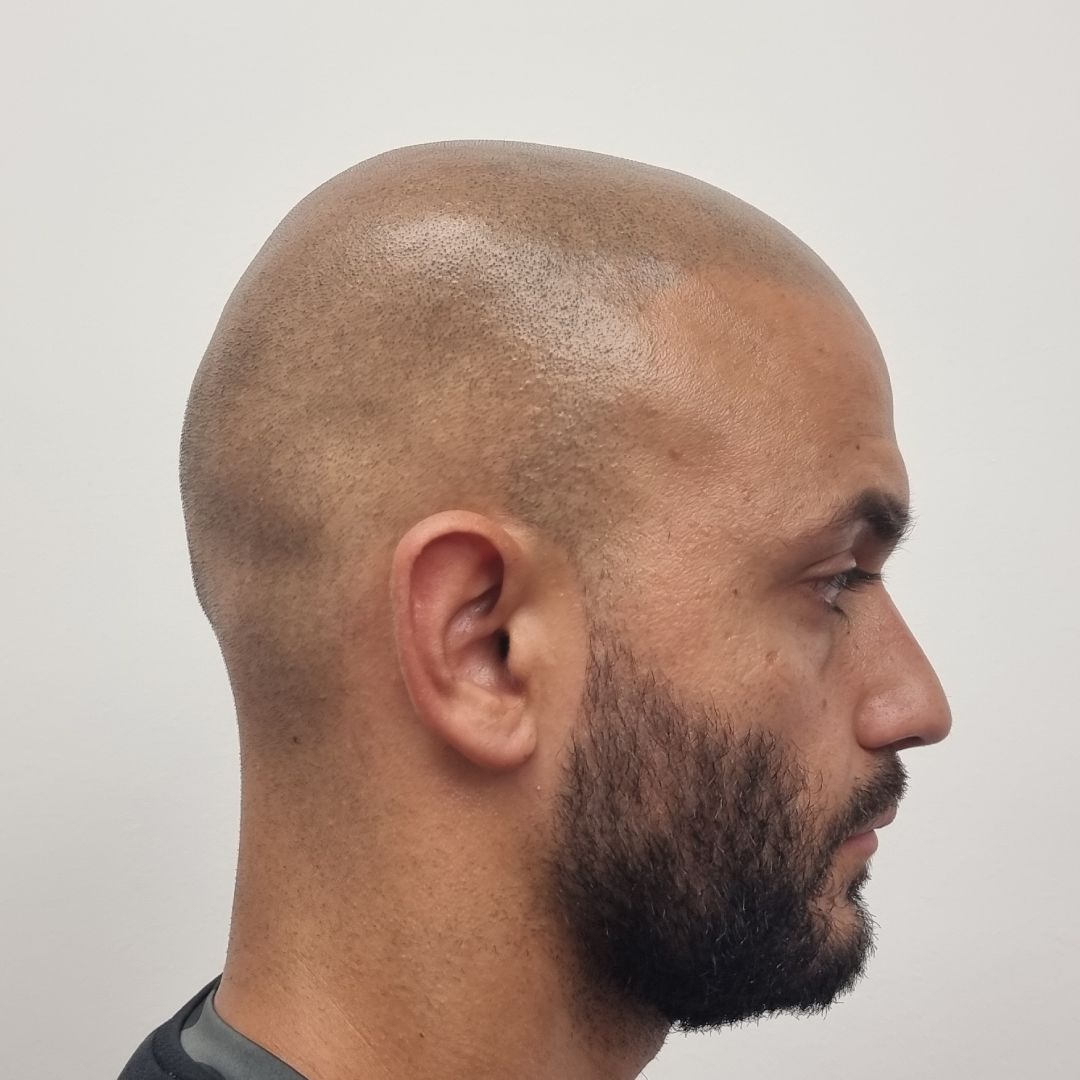
The treatment imitates the appearance of closely shaved hair. It is mainly used for balding or complete hair loss, with a natural-looking hairline.
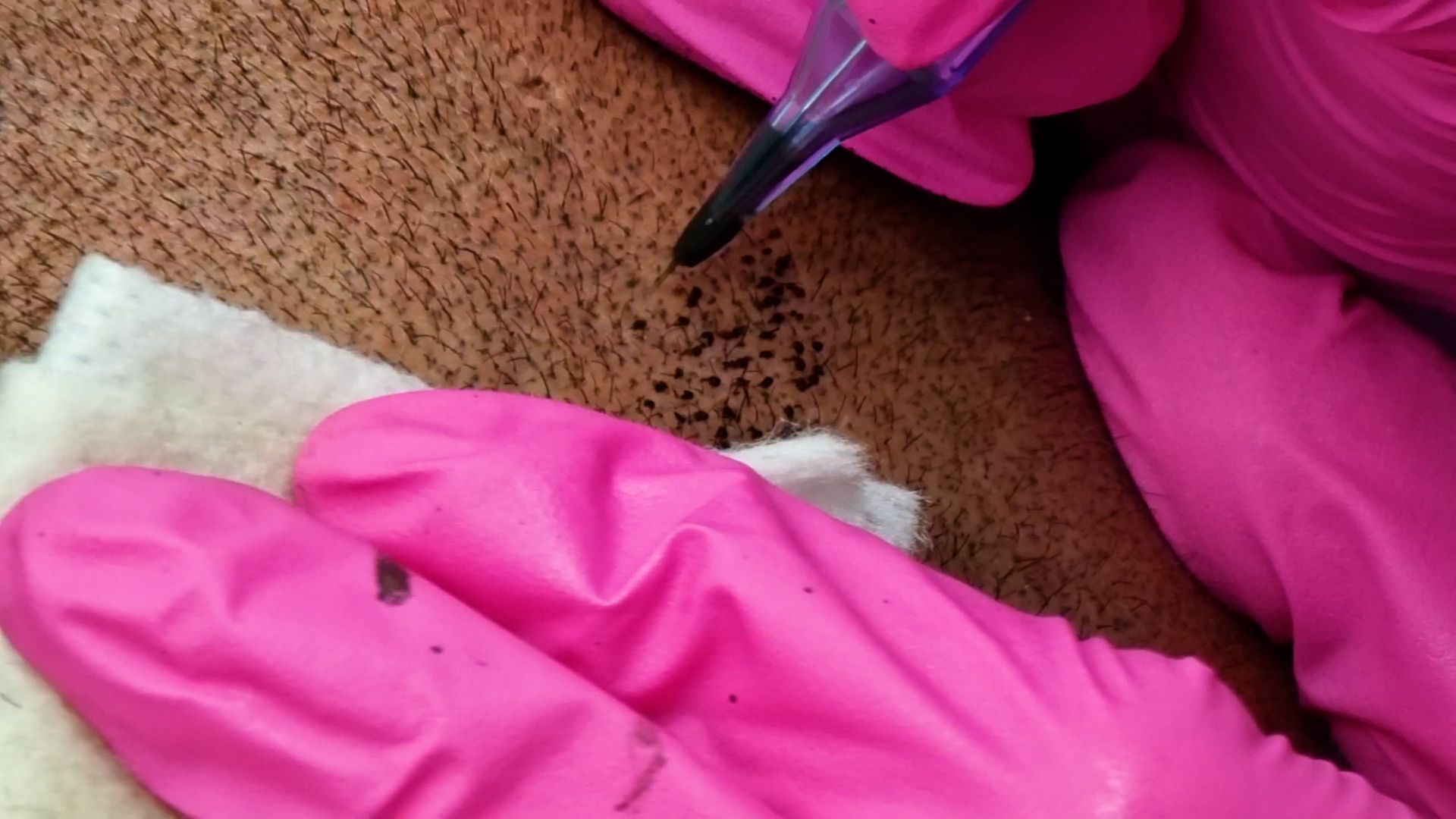
In a shaved-look hair tattoo, the specialist places tiny pigment dots in the upper layer of the scalp. The dots imitate the hair roots visible in freshly cut hair, so the bald area takes on the look of very closely cropped hair.
It can be a good choice for complete or partial balding because the contrast between the bald and the hair-bearing areas disappears: the existing hair, cut very short, and the pigmented scalp form a uniform surface.
What we take into account when planning
- The shape of the hairline: we match it to the proportions of the face so that it frames it naturally.
- The shade: we dilute the black pigment to match your existing hair colour and skin tone.
- The technique: we use the tiny, follicle-like dots of the DOT technique, which imitate the hair roots of very short hair.
- The hairstyle: the effect looks natural if you also keep your existing hair cut very short.
- Individual characteristics: the condition of the scalp, the extent of balding and the desired appearance.
-
Optical density for thinning hair
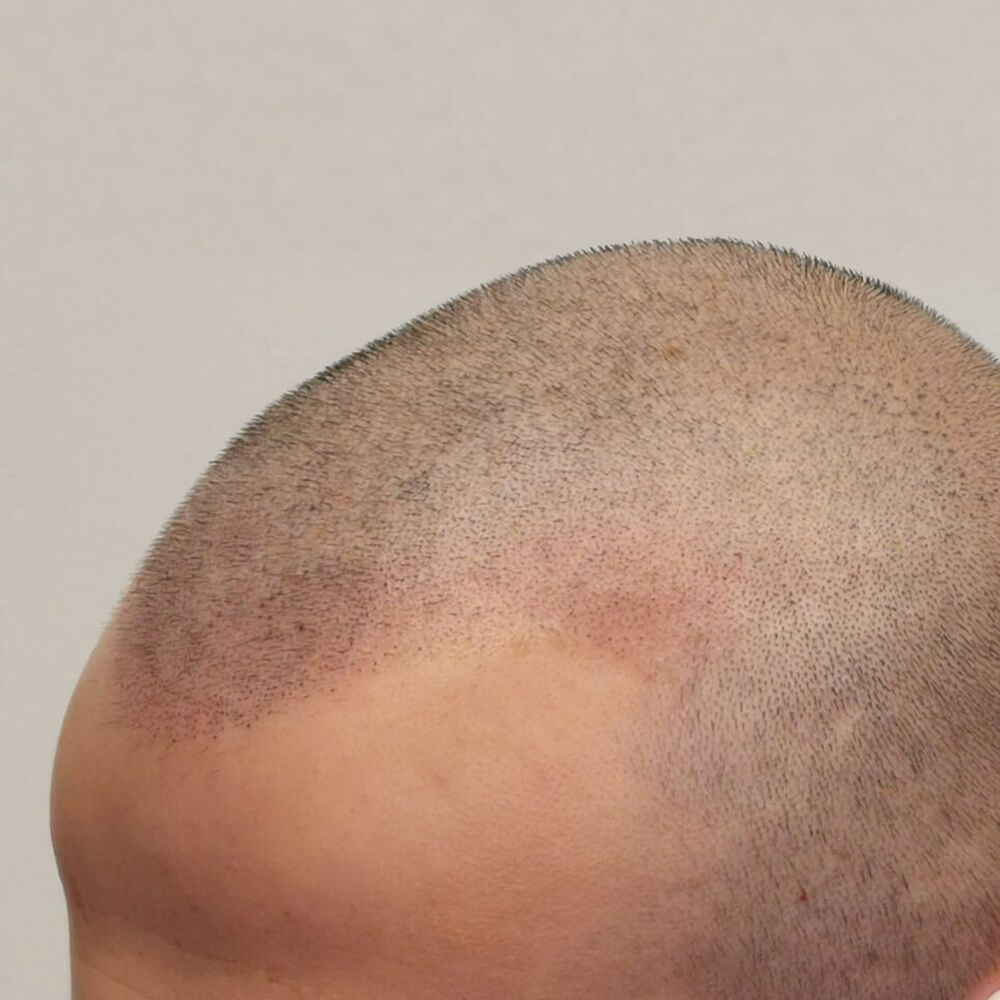
Pigment dots placed between the existing hairs reduce how much of the scalp shows through. The treatment can create a fuller-looking head of hair, even with longer hair.
With thinning hair, the pigment dots are placed between the existing hairs. Where the scalp shows through, the dots reduce the contrast between the hair and the lighter scalp, so the hair looks fuller and denser.
In diffuse thinning – when the hair thins evenly over a larger area rather than in patches – optical densification blends invisibly into the hair. Because the pigment sits in the scalp beneath the hairs, the treatment can also be used with longer hair.
What makes the effect look natural?
- The density and length of the existing hair: this determines where and how many pigment dots are needed.
- The distribution of the dots: we concentrate the pigment on the thinner areas, following the direction and density of the existing hair.
- The technique: between longer hairs, too, we place the tiny, root-like dots of the DOT technique.
- Harmony of colours: we dilute the black pigment to match your hair colour and skin tone.
The treatment does not increase the number of hairs and does not stop hair loss: it only adds optical density.
-
Correction after hair transplant
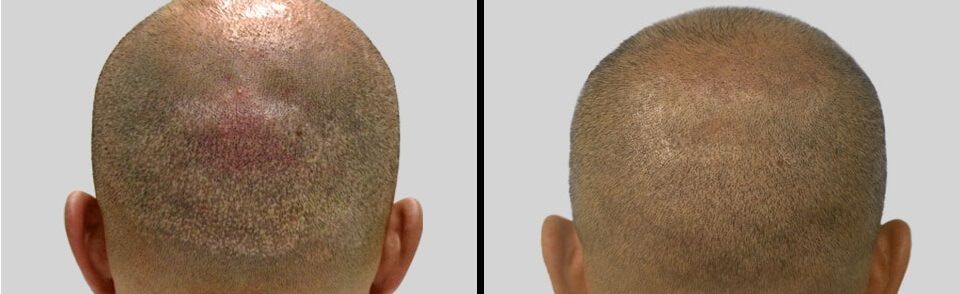
Scars and thinner areas remaining after a hair transplant can, in some cases, be optically corrected with a hair tattoo.
In a hair transplant, the doctor moves real hair follicles from the donor area – typically the back and sides of the head – to the thinning or bald area. A hair tattoo does not transplant hair: it creates an optical effect with pigment dots. The two procedures can therefore complement each other well.
After the procedure, the transplanted area may remain thinner than expected, the hair may be unevenly distributed, or the donor area may become thinner. If the amount of donor hair no longer allows another transplant, pigmentation can give a denser, more uniform overall look in the thinner areas.
When can it be appropriate?
- If the transplanted area is thin or uneven in density.
- If the donor area has thinned and not enough hair is left for another transplant.
- If scars remain after the hair transplant – you can read about this in the next treatment.
Not every problem after a hair transplant can be corrected with pigmentation. Whether it can be a solution in your case can only be decided after a personal assessment of your hair and scalp.
-
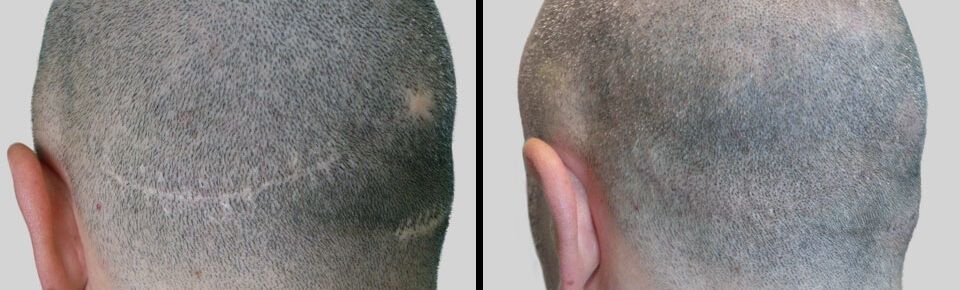
Correction of FUE dots and FUT scars
After a suitability assessment, the appearance of FUE dots or FUT scars from a hair transplant can be reduced with pigmentation.
With the FUE method, hair follicles are extracted one by one from the donor area, so tiny dot-like marks may remain in their place: these are the FUE dots. With the FUT method, a strip of skin is removed from the back of the head, leaving a thin, line-shaped (linear) scar.
With closely cropped hair, these marks can be clearly visible because they stand out from the surrounding hair-bearing scalp. During pigmentation, the dots placed on and around the scar continue the pattern of the surrounding hair roots, so the contrast is reduced and the scar is less noticeable.
Before the treatment, we assess
- the condition of the scar tissue and the surrounding scalp,
- the density of the hair around the scar and the planned hair length,
- the matching individual pigment shade and dot pattern.
A hair tattoo does not physically remove scars; it can only reduce their visibility optically.
 Results Real results, real change See our hair tattoo references and before-and-after results.
FAQ
Frequently asked questions about the treatments
Which treatment is suitable for which problem?
The four treatments offer optical solutions for different situations:
- shaved-look hair tattoo: for a completely or largely bald scalp, with closely cropped hair,
- optical density for thinning hair: when the hair is there but thin, and the scalp shows through,
- correction after hair transplant: for a thin or uneven transplanted area or a thinned donor area,
- correction of FUE dots and FUT scars: to reduce the visibility of dot-like marks and a linear scar in the donor area.
Which one suits you is decided after assessing your hair and scalp.
Which technique is used for the hair tattoo?
The DOT technique: we place tiny, follicle-like micro-dots in the scalp. We use it both for very closely cropped hair and between longer hairs, adjusting the size and density of the dots to the existing hair.
How can a hair tattoo be used for thinning hair?
The pigment dots are placed between the existing hairs, so less of the scalp shows through and the hair looks fuller. With thin but normal-length hair, the hair can stay longer; however, if the pigment is placed next to the hairs, the hair must be worn very closely cropped. The treatment does not increase the number of hairs.
Can scars left after a hair transplant be corrected?
After a proper assessment, yes – optically. Pigment placed on and around FUE dots and the linear scar of the FUT method reduces the contrast between the scar and the surrounding hair. The scars do not physically disappear, but they can become less noticeable.

Contact
Which treatment is right for you?
Request a free quote or contact us – we will help you choose the treatment that suits you.
- Phone+36 30 198 9648
- Emailhajtetovalas@gmail.com
- AddressSzegedi út 56., 1135 Budapest, Hungary
- Opening hoursMonday–Friday: 8:00–16:00